 Izstāžu iela 11, Valdlauči, Ķekavas novads, LV-1076
  +371 254 10 225
 info@kulmen.lv
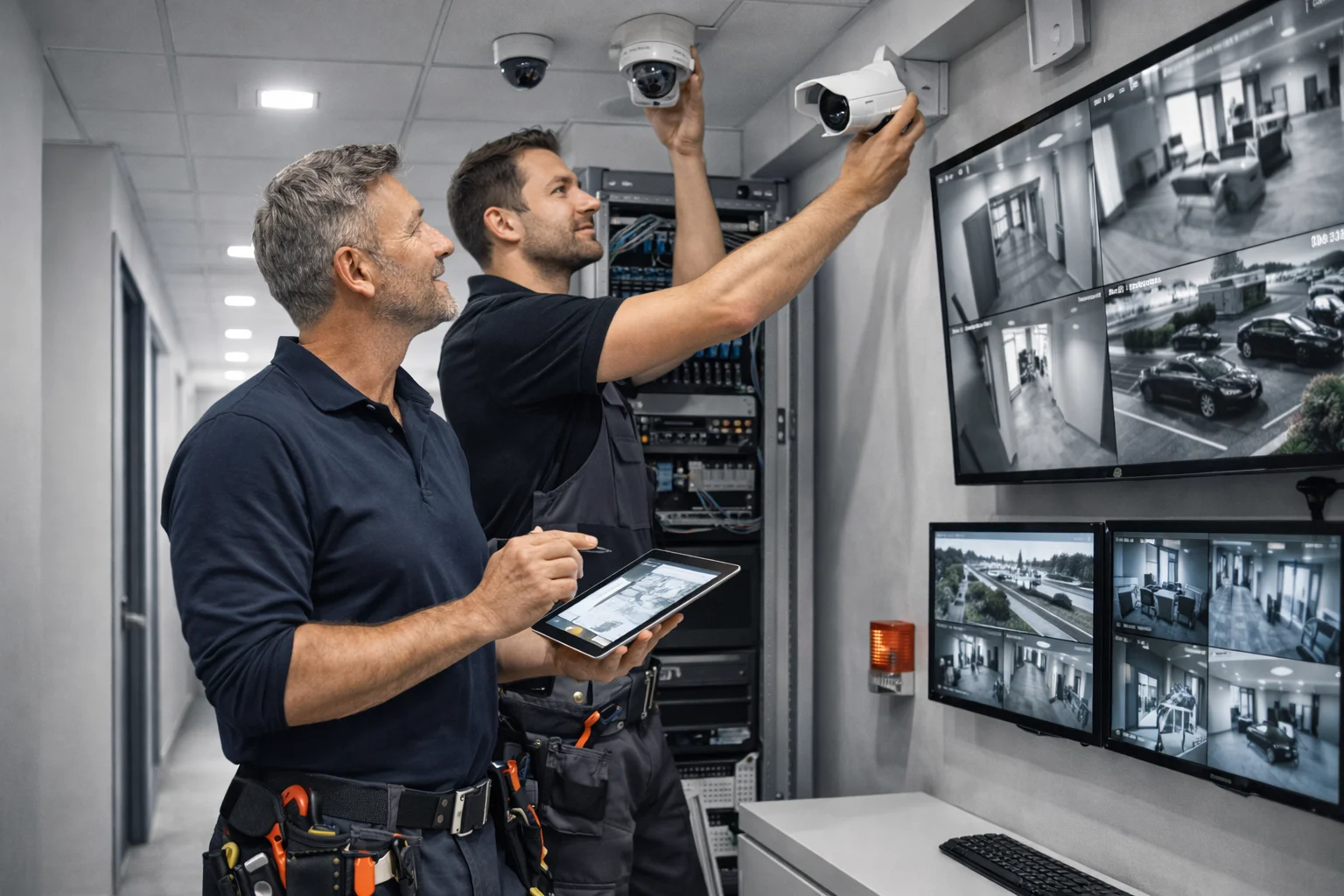
Video surveillance solutions
SIA KULMEN designs, installs and maintains video surveillance systems for private homes, offices, shops, warehouses, car parks, manufacturing sites and larger outdoor areas. The scope is adapted to what the customer needs to observe, record and manage during daily operation.
Video surveillance can provide visibility of entrances, perimeters, customer and vehicle movement, technical areas or individual process stages. A camera does not address every security need on its own, so coverage, image detail and the intended response should be planned around a clearly defined purpose.
A solution may include fixed or controllable cameras, recording equipment, storage media, network components, backup power, a display and securely configured remote access. Camera format, lens, illumination and recording settings are selected according to the viewing task and the actual conditions at each location.
KULMEN surveys the site, plans camera and cable locations, installs the equipment, configures authorised access and verifies the result under practical conditions. Existing systems can also be diagnosed and selectively upgraded, including camera replacement, recording capacity review, network adjustments and planned maintenance.
Surveillance purpose and coverage planning
Design begins with practical questions: which area must be visible, what detail is required, under which lighting and weather conditions the camera will operate, and who will review live or recorded video. Viewing angles, obstructions, backlight, night illumination and available mounting positions are assessed on site.
Camera placement follows the required task rather than floor area alone. One position may require a broad situational overview, while another needs detail at an entrance or along a movement path. Privacy masking, user permissions and the recording retention period selected by the customer are also agreed before installation.
Cameras, recording and integrations
Camera selection considers resolution, lens characteristics, low-light performance, environmental protection and any useful analytical functions. Recording equipment and storage are sized according to camera quantity, data rate, recording mode, image quality and the required archive, with room for the operating pattern of the actual property.
Video surveillance may be linked with an intrusion alarm, access control, intercom or central operator workstation when the systems provide compatible interfaces. The intended outcome is defined first, such as displaying a relevant camera after an event, and the completed integration is then tested in realistic operating scenarios.
Installation, configuration and maintenance
Installation covers data and power connections, camera mounting, recording equipment and network components. Camera direction, focus and image parameters are then adjusted for daylight and low-light conditions. Recording, search, export, time settings and authorised local or remote access are checked before the system is handed over.
Dirty lenses, changed lighting, obstructed views, ageing storage media or network modifications can reduce the practical value of a system. Maintenance includes image and recording checks, camera cleaning, event and connection diagnostics, storage health review and configuration updates when site conditions or user requirements have changed.
Frequently Asked Questions