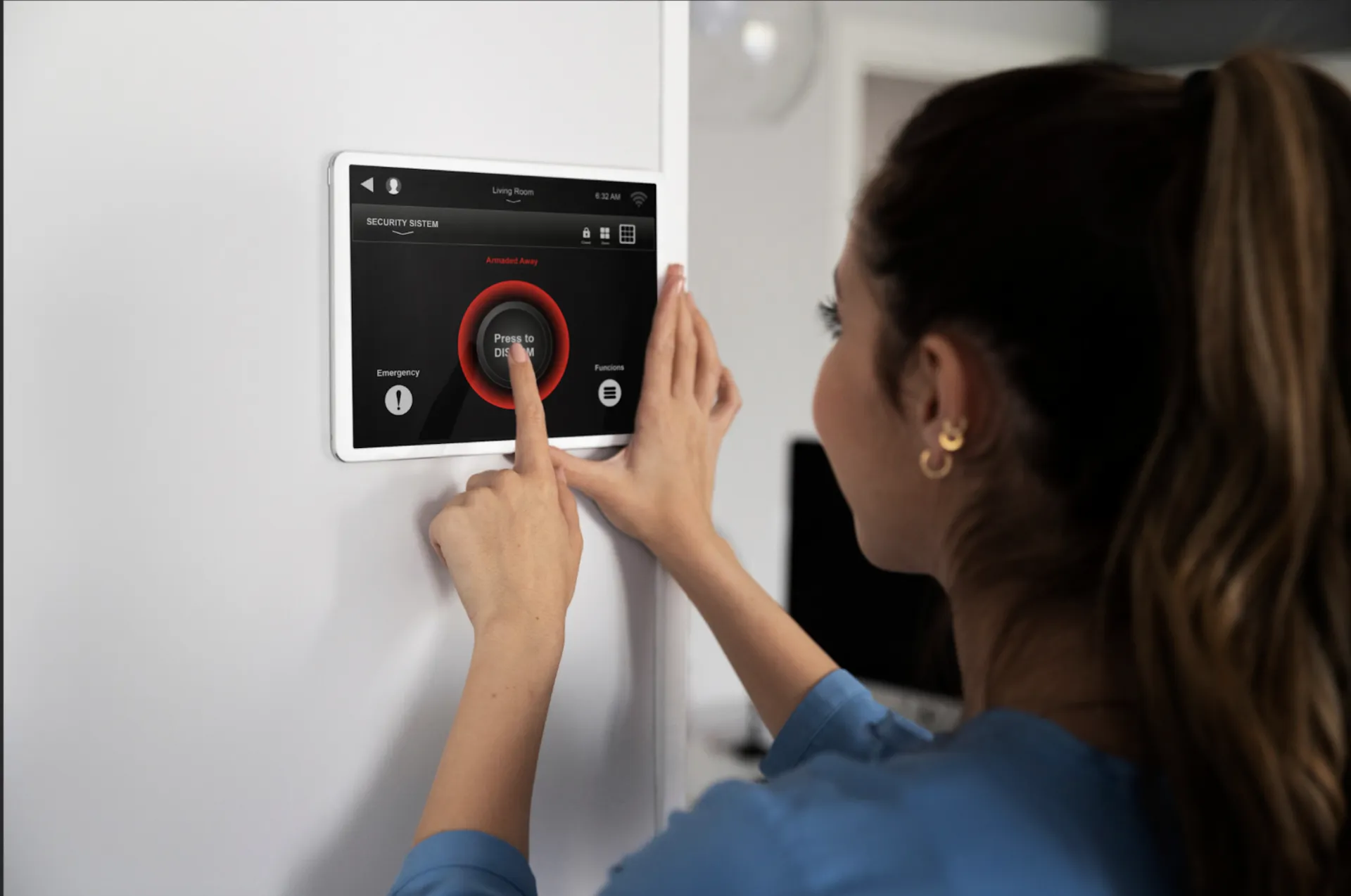
Security Alarm System Installation

Home / Services / Security Alarm System Installation

Security Alarm Systems

Security alarm solutions

SIA KULMEN designs, installs and maintains intrusion alarm systems for private homes, offices, shops, warehouses, manufacturing sites and other properties. Each solution follows the building layout, daily routines and areas that require monitoring.

The system detects signs of unauthorised entry or another defined event and notifies a selected recipient. It supports timely awareness, while the response procedure and responsible users are established separately for each property.

A solution may include motion, door, window, glass-break or other detectors, a control panel, keypad, sirens, standby power and communications. Equipment is selected for the rooms, environment, coverage and operating method.

KULMEN surveys the site, plans zones and devices, installs cables or configures wireless components, programmes users and tests scenarios. Existing systems can also be diagnosed, extended and maintained as requirements change.

Assessment of risks and protected areas

Planning considers entrances, windows, movement routes, separately protected rooms and normal user activity. Pets, temperature changes, dust and other conditions that may affect detector selection are reviewed before positions are agreed.

A wired, wireless or hybrid solution is selected for the construction stage, cable routes, system scale and possible expansion. Existing panels, detectors and communication devices are assessed for compatibility, condition and practical reuse.

Devices, notifications and integrations

Detectors are arranged into logical zones so an event location is clear and selected areas can be armed independently. User codes, controls, delays and notification recipients follow the agreed operating routine.

Depending on the equipment, events may reach a mobile application or a security service monitoring station under a separate arrangement. Video surveillance or access control integration requires compatible interfaces and a defined purpose.

Installation, testing and maintenance

After installation, detectors, zones, sirens, communication paths, standby power and user controls are tested. Arming, disarming, timing and the notification sequence are checked through practical operating scenarios.

Refurbishment, moved furniture, ageing batteries or communication changes can affect operation. Maintenance includes inspection, functional tests, event review, battery and communication checks, and configuration updates when the property or response procedure changes.

Security alarm systems for homes, apartments and businesses

An alarm solution is designed around property risks, entrances, daily use and the intended response to an event rather than room count alone.

Detector types, zones, control methods and notification recipients differ between homes, offices, shops and warehouses. Pets, environmental conditions and future extensions are clarified before selection.

Homes and apartments

Entrances and selected rooms are protected with clear daily arming scenarios and appropriate consideration for pets.

Offices and shops

Zones and user permissions reflect work schedules, staff, technical rooms and separate risk areas.

Warehouses and industry

Large spaces, gates, dust, temperature, communication coverage and security-system integrations are assessed.

Wired or wireless alarms, mobile control and monitoring

Wired systems suit projects where cabling can be planned during construction; wireless or hybrid systems can reduce disruption in finished premises.

A mobile app may provide control and notifications, subject to equipment and communication services. Connection to an alarm receiving centre must be coordinated with the selected monitoring provider.

Wired alarm

A stable option for new builds and refurbishments where cable routes can be installed and documented correctly.

Wireless or hybrid alarm

Practical in existing buildings, with radio coverage, batteries, environment and scale considered.

Alarm response

App, call or monitoring workflows are configured around agreed responsible users and service arrangements.

Practical answers

Frequently asked questions

The choice depends on entrances and rooms, surroundings, pets, communication availability and the intended alarm response. A survey determines whether wired, wireless or hybrid equipment is appropriate.
Wired systems are easier to plan during construction or refurbishment, while wireless equipment may suit finished rooms. Scale, radio coverage and maintenance also affect the choice.
Yes, if the control panel and service support a mobile app. Users may receive different permissions, while features and notification channels depend on the selected system.
Yes, where the system and communications are compatible with the selected monitoring provider. Monitoring service terms are agreed separately with that provider.
Cost depends on zones, detectors and controls, wired or wireless architecture, cabling, communications, integrations, programming and site conditions.
Often yes, if the panel has spare capacity and new devices are compatible. The model, configuration, communications and condition of existing devices are checked first.
Yes. Compatible systems can link an alarm event to cameras or another defined workflow. The integration is designed around a purpose and the technical interfaces available.
Useful details include plans, entrances and protected zones, fit-out condition, pets, internet or mobile coverage, intended users and whether monitoring is required.

Related solutions

Explore the services and product categories that can form a complete solution for one property.

Need a solution for a specific property?

Send the property address, a short description and any available drawings or documentation. We will review the initial information and clarify the next step.

Request a consultation